Pest Shield attended a residential property in Boldon (NE35) following reports of significant wasp activity within the front garden.
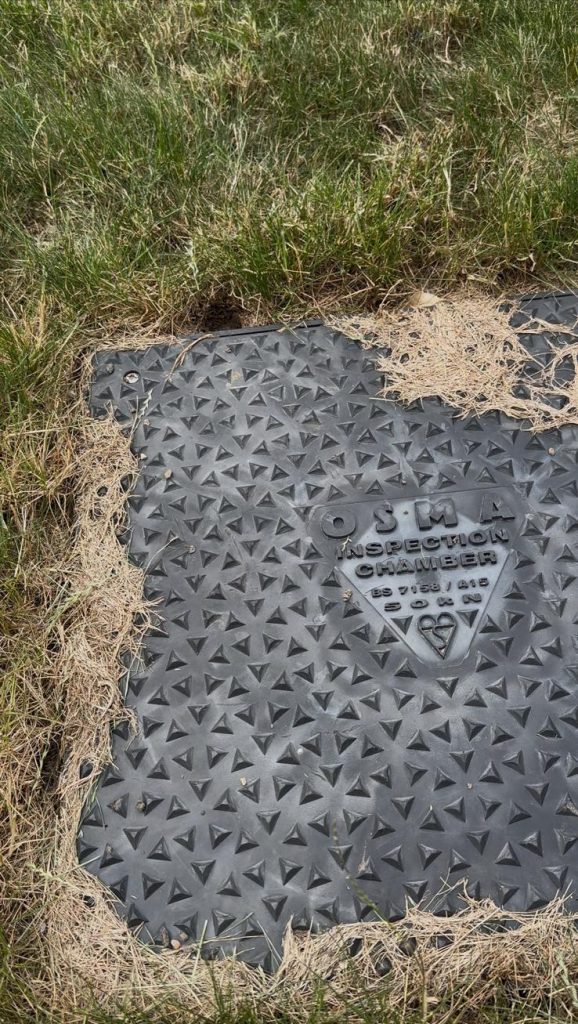
The homeowner had noticed large numbers of wasps repeatedly flying around an inspection chamber installed within the front lawn and was concerned they had established a nest within the drainage system.
A detailed inspection was carried out to determine the exact nesting location and identify the safest and most effective treatment method.
Careful observation confirmed that the inspection chamber itself was not being used as a nesting site.
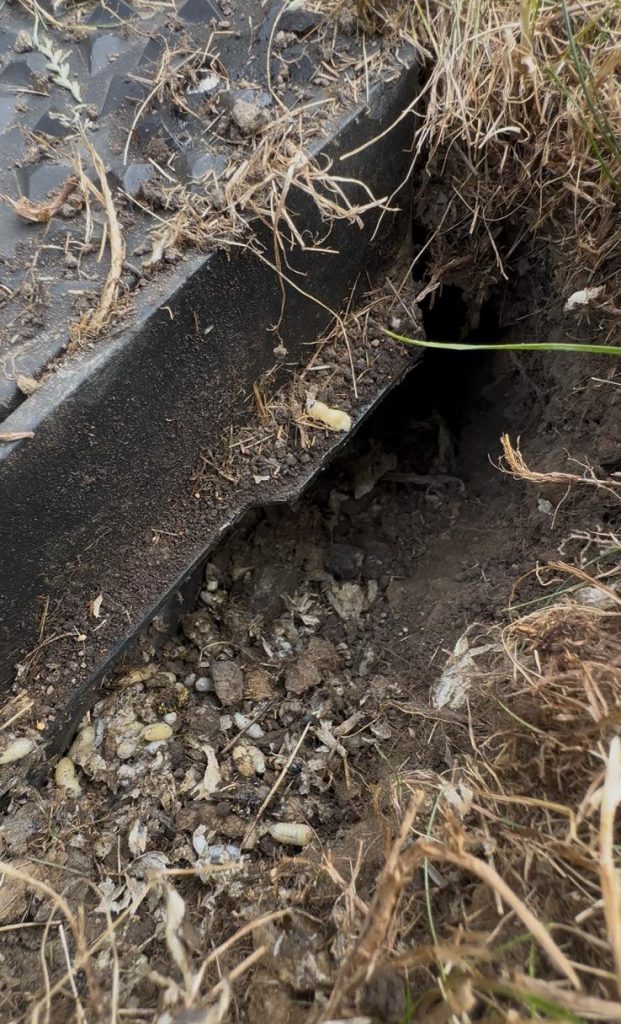
Instead, worker wasps were repeatedly entering and exiting a small opening immediately alongside the inspection chamber cover. Their flight pattern confirmed the colony had excavated an underground nest within the surrounding soil, using the edge of the inspection chamber as a sheltered point of access.
Ground nests like this can remain hidden until colonies become well established, with the entrance often measuring only a few centimetres across.
By identifying the true entrance, treatment could be directed precisely where it was needed without unnecessarily disturbing the drainage system.
Following confirmation of the nest location, 20 grams of Vulcan P5 DP insecticidal dust was carefully applied directly into the active entrance in accordance with the product label.
As the nest was located within soft ground and was fully accessible, it was decided to excavate the nest following treatment.
The surrounding soil was carefully removed until the paper nest structure was exposed. The nest was then manually excavated and removed in its entirety, removing the majority of the colony and developing brood while significantly reducing the likelihood of any remaining activity.
The combination of targeted insecticidal treatment and complete excavation provided rapid control of the infestation.
By confirming that the wasps were nesting beneath the lawn rather than inside the inspection chamber itself, unnecessary drainage investigation was avoided and the problem was resolved using a simple inspection-led approach.
Ground-nesting wasps are often mistaken for nests within drains or inspection chambers because they frequently use nearby structures as visual reference points when returning to the colony.
Without observing the insects’ behaviour, it would have been easy to assume the nest was located within the chamber itself.
Instead, careful inspection confirmed the colony had established an underground nest immediately beside the chamber, allowing treatment to be directed accurately before the entire nest was excavated and removed.
Property Type: Residential Property
Location: Boldon, South Tyneside NE35
Services Provided: Wasp Nest Inspection, Ground Wasp Nest Treatment, Underground Nest Excavation, Wasp Nest Removal