Rats are rarely seen during the early stages of an infestation. Instead, they leave behind clear evidence of their activity. Spotting these signs early makes the problem far easier to deal with.
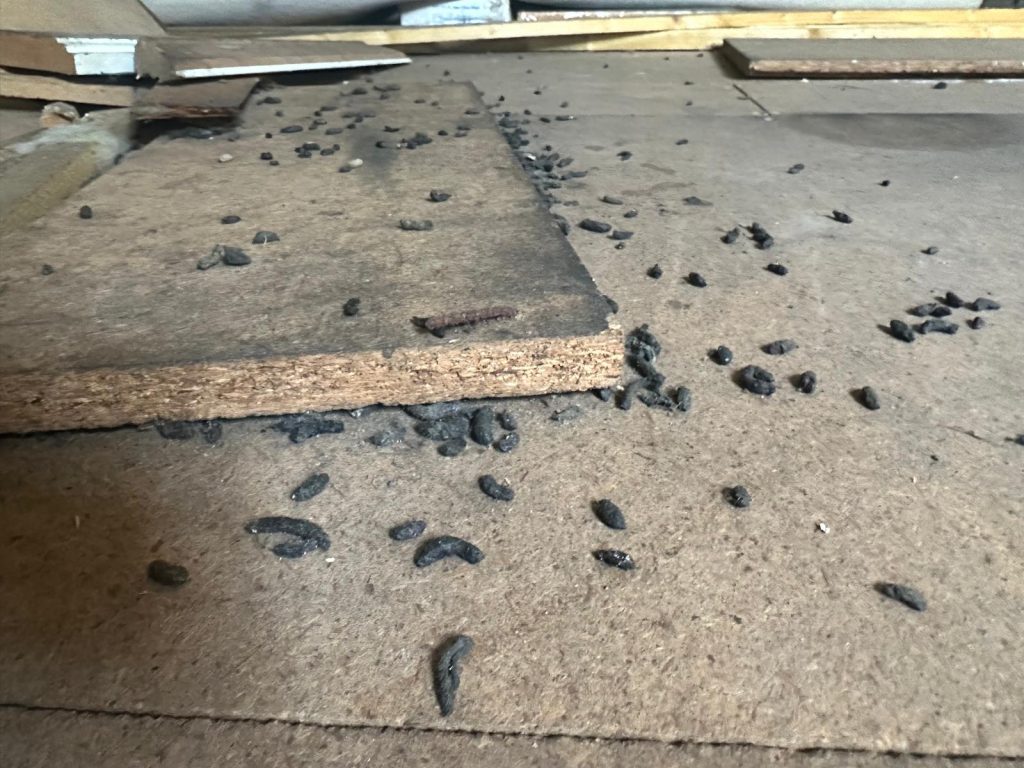
Rat droppings are one of the most obvious indicators of activity.
They are typically dark, sausage-shaped, and around 10–20mm in length. Fresh droppings will be soft and shiny, while older droppings become dry and crumbly.
Rats tend to defecate in the same areas repeatedly, often referred to as latrine sites. This means droppings are usually found in clusters rather than scattered randomly, typically along walls, behind appliances, inside cupboards, or in loft and subfloor areas.
Scratching, scurrying, or gnawing sounds—especially at night—are a strong sign of rat activity.
Rats are nocturnal, so activity is most noticeable when the property is quiet. Movement in lofts, wall cavities, or beneath floors is common.
Rats constantly gnaw to keep their teeth worn down.
This can result in damage to wood, plastic, plasterboard, and electrical wiring. Chewed cables present a serious fire risk and should not be ignored.
Rats follow the same routes repeatedly.
As they move along walls and surfaces, they leave dark smear marks caused by grease and dirt on their fur. These are often visible along skirting boards, beams, and pipe runs.
In dusty areas such as lofts or underfloor voids, you may see footprints or tail drag marks.
These are often easier to spot when light is shone across the surface at an angle.
Outside, rats create burrows in soil, under decking, sheds, or patios.
Inside, they build nests using shredded materials such as insulation, cardboard, or fabric. Nesting activity is often hidden within wall voids, loft insulation, or beneath floors.
A heavy, unpleasant smell—often described as ammonia-like—can indicate a rat infestation.
This is caused by urine build-up and is usually more noticeable in enclosed areas such as cupboards, lofts, or basements.
Dogs and cats often detect rats before humans do.
Unusual behaviour such as staring at walls, scratching at floors, or reacting to specific areas can indicate hidden activity.
Early infestations may only show subtle signs such as occasional noises or a small number of droppings.
As the infestation becomes established, signs become more obvious, with increased noise, visible damage, stronger odours, and more widespread evidence.
Common areas to inspect include:
Behind kitchen units and appliances
Lofts and roof spaces
Under floors or in basements
Around pipe entry points and service cupboards
External areas such as drains, sheds, and decking
Rats tend to stay close to cover, so focus on edges and hidden areas rather than open spaces.
If you notice any of these signs, it is important to act quickly.
Rats breed rapidly and can cause structural damage, contaminate surfaces, and create health risks. The longer the issue is left, the more difficult it becomes to resolve.