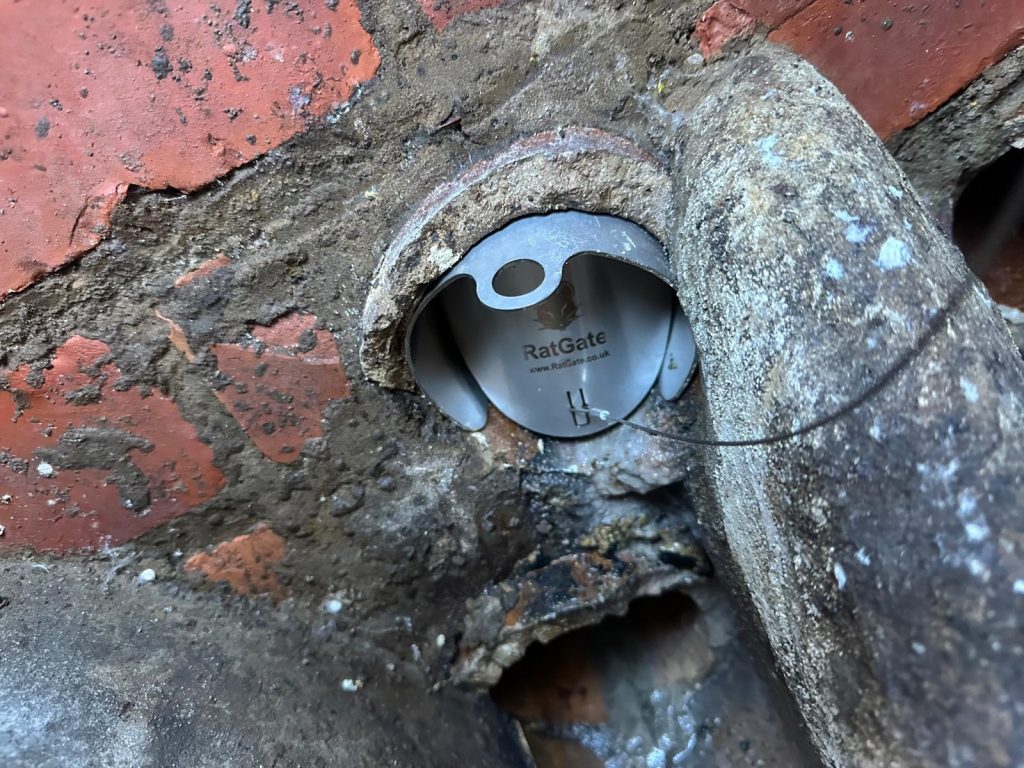
If rats keep returning to your property, it is almost never a new infestation. In most cases, it means the original problem has not been fully resolved.
Rats come back because they still have access to the property and a reason to be there. Unless both are addressed, the issue will continue.
The main reason rats keep returning is that they are still able to get in.
Rats do not randomly reappear. If they are coming back, they are using the same route in and out of the property. This could be through gaps around pipework, damaged air bricks, structural defects, or drainage issues.
Until that access point is identified and removed, the problem will persist.
A significant number of recurring infestations originate from faulty drains.
Rats live in sewer systems. If there is a crack, break, or open connection in the drainage system, they can escape into the ground beneath the property and enter internally.
In many cases, this is not visible without proper inspection. Surface-level treatment will not resolve a drainage defect.
In semi-detached and terraced properties, buildings often share cavity walls, subfloor voids, loft spaces, and service runs.
This allows rats to move between properties without going outside. If a neighbouring property has an active infestation or is not being treated, rats can continue to re-enter even after work has been carried out.
In these situations, long-term control can be difficult unless the wider issue is addressed.
Rats will remain in an area if it provides shelter and a food source.
Overgrown gardens, cluttered areas, accessible waste, and outbuildings such as sheds or decking can all provide harbourage. Even if entry points into the building are limited, these conditions can sustain a local population.
Reducing these factors is an important part of long-term control.
Baiting or trapping will deal with the rats currently present, but it does not stop new rats from entering.
This is why problems often appear to “come back” shortly after treatment. In reality, the underlying cause has not been addressed.
Without identifying how rats are getting in, treatment becomes a temporary measure rather than a solution.
You may be dealing with a recurring issue if:
Activity returns shortly after treatment
Droppings reappear in the same locations
Noises continue in the same areas
There is no clear explanation for how rats are entering
These are all indicators that the access point is still active.
To resolve the issue properly, both the infestation and the cause must be addressed.
This typically involves:
Identifying the exact entry point through a full inspection
Repairing structural defects such as gaps and damaged vents
Addressing drainage issues where necessary
Reducing harbourage and environmental attractants
Once access is removed, the problem can be resolved long-term.
If rats continue to return despite previous treatment, a more detailed inspection is required.
An inspection-led approach focuses on identifying how and why rats are entering, rather than simply dealing with the symptoms. This is key to achieving a permanent solution.