Yes. Rats commonly use drainage systems to move around and can enter properties through defects in the system.
Sewers provide warmth, shelter, and a constant food source, so rats naturally live and travel within them. A properly functioning drainage system should prevent them from escaping, but when faults are present, they can leave the system and enter buildings.
Rats are strong swimmers and can move through pipework with ease. They are able to travel long distances within drainage systems and will exploit any weakness they encounter.
They do not “come up through toilets” in normal circumstances. Entry is far more likely to occur through structural defects that allow them to leave the pipework before reaching the appliance.
Damage to underground pipework allows rats to escape into surrounding soil. From there, they can burrow and access the property through foundations, subfloors, or cavities.
Old or unused pipework that has not been properly sealed provides a direct route out of the drainage system.
These are commonly found in older properties or where extensions and alterations have been carried out.
Loose joints, displaced pipes, and poor-quality repairs can all create gaps large enough for rats to pass through.
These faults are often hidden underground and are not visible without proper inspection.
Utility installations can compromise drainage systems.
Where gas or water pipes have been installed using moling, they can pass through existing drains and leave them damaged or open. This creates a direct pathway from the sewer system into the ground beneath the property.
Common indicators include:
Activity in ground floor areas or basements
Rats appearing suddenly with no obvious external entry point
Repeated infestations despite previous treatment
Evidence of activity near pipe entry points or service cupboards
Drain-related infestations often feel persistent because the source of the problem remains active beneath the property.
Drainage faults are not visible during a standard inspection.
Without lifting covers or carrying out a CCTV survey, these defects remain hidden. As a result, many infestations are treated repeatedly without ever addressing the root cause.
Stopping rats at source requires addressing the defect, not just the infestation.
This may involve:
Repairing or replacing damaged pipework
Sealing redundant or unused drain lines
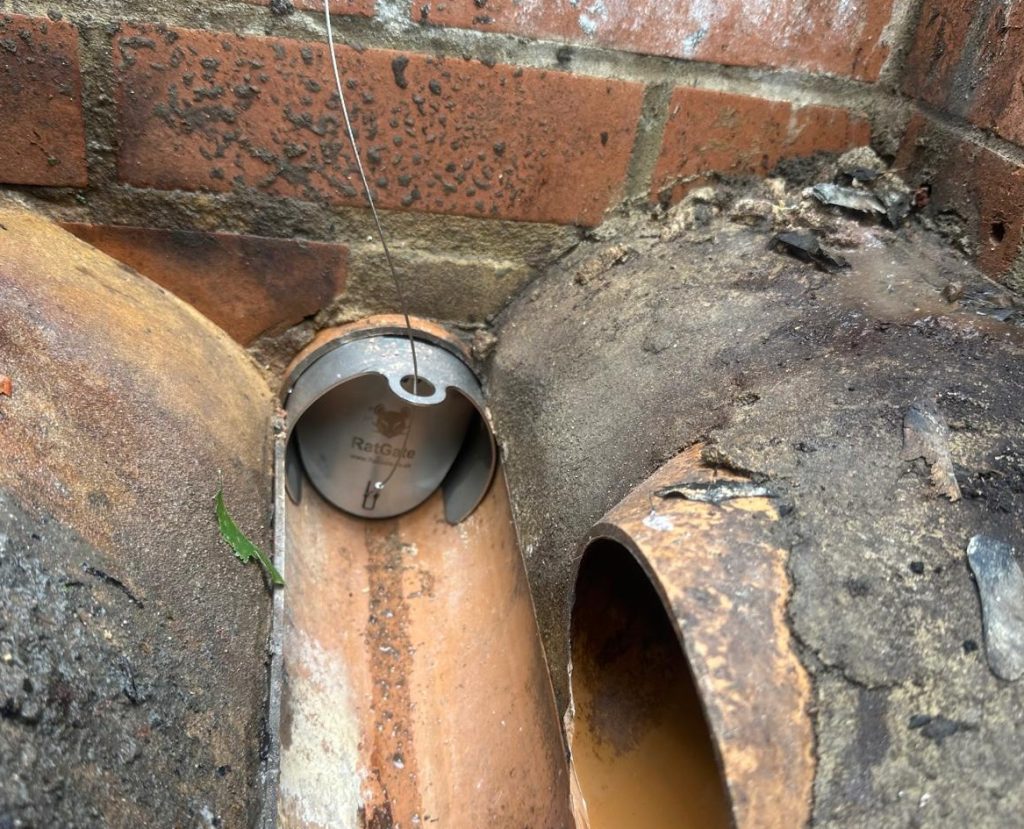
Installing non-return valves (NRVs) to prevent rats travelling upstream
Carrying out CCTV surveys to locate hidden faults
Once the drainage system is secure, the infestation can be resolved properly.
You should strongly suspect a drainage-related problem if:
Rats keep returning after treatment
There is no obvious external entry point
Activity is focused around kitchens, basements, or service areas
Neighbours are experiencing similar issues
In these cases, a drainage inspection is usually required.